 NOBISKRUG GMBH
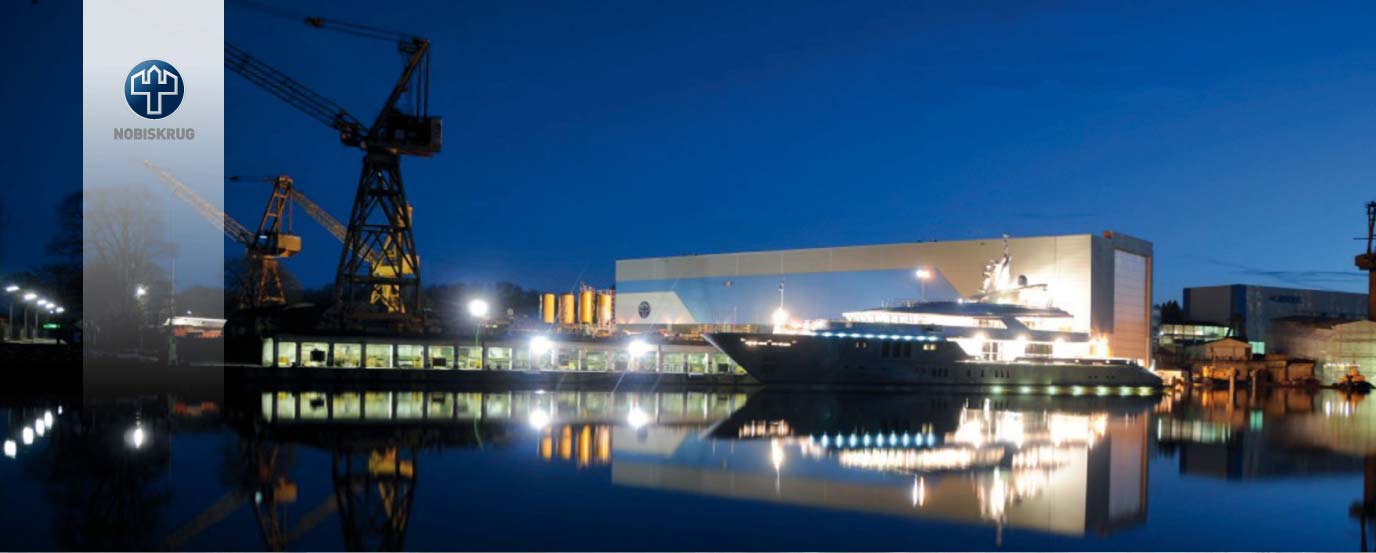
The Flensburg Shipbuilding Company (FSG) and Nobiskrug Shipyard in Rendsburg have filed for insolvency, casting a renewed spotlight on the controversial business dealings of entrepreneur Lars Windhorst.
Another Addition to Windhorst's Troubled Portfolio
The list of insolvent companies associated with Lars Windhorst has grown longer. As the owner of FSG and Nobiskrug Shipyard, Windhorst now faces negotiations with court-appointed provisional insolvency administrators over the future of his firms.
According to court spokespersons in Flensburg and Rendsburg, the shipyards’ financial situation is no longer sustainable. Approximately 600 employees now face uncertainty about their jobs. Michael Schmidt from IG Metall noted that "delayed salary payments and the absence of local representatives have worsened the situation."
A Pattern of Financial Turbulence
The shipyard bankruptcies are not Windhorst's first setbacks. Once celebrated as "Kohl’s Wunderkind," his career has been marred by numerous business failures. In the 1990s, Windhorst gained prominence as a teenage entrepreneur when then-Chancellor Helmut Kohl invited him on a trade mission to Asia. This opportunity gave the 18-year-old access to prominent investors and markets, propelling his early success.
However, financial missteps soon followed. By 2004, three of his companies declared bankruptcy, a result of overexpansion and risky investments. In 2009, Windhorst faced charges of insolvency fraud and breach of trust, accused of misusing company funds for personal purposes and defrauding creditors of millions. The trial concluded with a conviction and a suspended sentence.
The Tennor Holding and High-Stakes Investments
Windhorst’s current ventures revolve around Tennor Holding, his Netherlands-based investment company, which specializes in distressed assets and high-risk investments. Despite multiple business failures, Windhorst has repeatedly managed to launch new projects under Tennor's umbrella.
Tennor employs several hundred people globally across industries such as real estate, sports, and technology. However, reports of financial irregularities and opaque liability structures have plagued its operations. Recently, a legal dispute with the Dutch arm of McCourt Global Holding over an equestrian business drew headlines, with a court describing Windhorst’s actions as "not credible."
The Hertha BSC Saga
Windhorst's strategy often involves acquiring struggling enterprises and attempting to revive them with fresh capital. However, many of his initiatives have failed, including his high-profile investment in Berlin football club Hertha BSC. Despite injecting €374 million, Windhorst could not secure the club's stability, and internal conflicts became public.
The most controversial episode involved allegations that Windhorst hired an Israeli agency to orchestrate a social media campaign against then-club president Werner Gegenbauer. Although the club denied the accusations, the fallout led to Gegenbauer's resignation. Windhorst ultimately exited Hertha BSC in 2023 with substantial financial losses.
Shipbuilding: A Struggle for Stability
Windhorst’s lack of transparency and complex company structures have drawn criticism from industry experts, as demonstrated in the cases of FSG and Nobiskrug. Since 2019, Tennor Holding has been an investor in the shipyards. This followed a turbulent period in which FSG reported a net loss of €111 million on revenues of €213 million in 2018.
Previously owned by Norwegian conglomerate Siem Industries, FSG was acquired by Windhorst with promises of a revival. Windhorst launched “FSG 2.0” in 2020, positioning the company as debt-free but without any new orders. However, a failed shipbuilding deal led to another insolvency within the same year.
The Road Ahead
The recent insolvency filings of FSG and Nobiskrug add to the growing challenges faced by Lars Windhorst. As his business empire comes under increased scrutiny, the future of these historic shipyards—and their workforce—remains uncertain.