 American Bureau of Shipping (ABS)
 Samsung Heavy Industries Co., Ltd. (Geoje Shipyard)
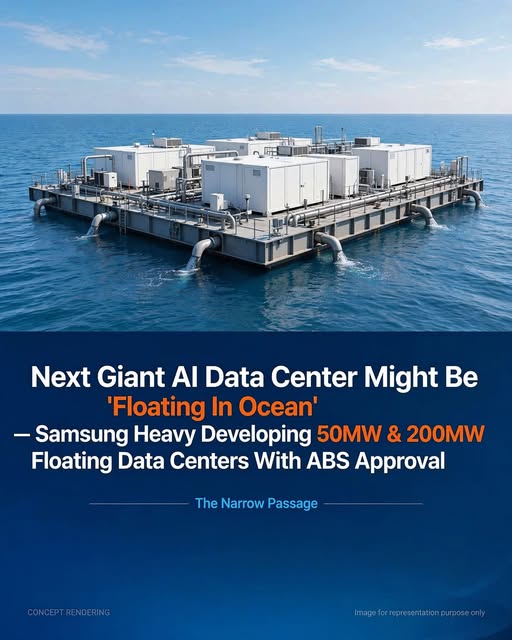
Samsung Heavy Industries is developing floating data centers designed to house AI computing infrastructure at sea, with a 50-megawatt design already completed and a larger 200-megawatt version receiving early-stage Approval in Principle from classification society ABS (American Bureau of Shipping). The floating platforms are intended to address the growing land, power and cooling demands associated with AI computing. By building the facilities at shipyards, developers aim to reduce pressure on limited onshore sites while using seawater for cooling systems, an approach that could lower energy costs compared with conventional land-based data centers. Samsung Heavy Industries is working with partners on plans to deploy the floating units in the United States, though the project remains at an early stage of development. The initiative reflects a broader shift in how the technology and maritime industries are approaching AI infrastructure, as demand for computing capacity outpaces the availability of suitable land and power resources in many markets. Classification society approval, even at the preliminary Approval in Principle stage, signals that the concept is being evaluated against established maritime safety and engineering standards rather than treated purely as a design exercise. No timeline for construction or deployment has been disclosed, and the designs remain conceptual pending further engineering and regulatory review.