 LLOYD WERFT BREMERHAVEN GMBH
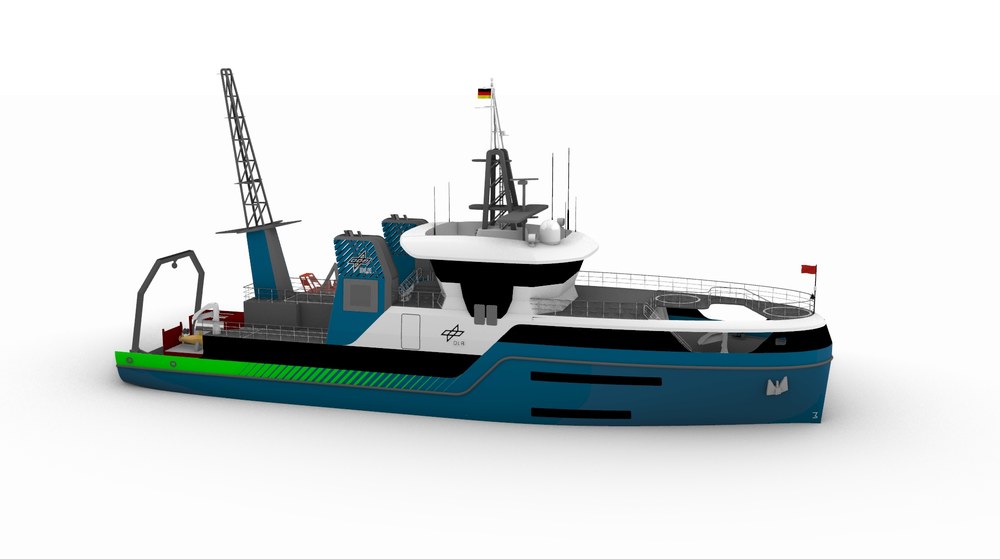
DLR Awards Contract for New Research Vessel to Lloyd Werft The German Aerospace Center (DLR) has officially awarded Lloyd Werft in Bremerhaven a contract to build a new research ship. The agreement was signed on February 3, 2025. The foundational ship is estimated to cost approximately 36 million euros. This vessel will serve as an innovation platform for the maritime industry to co-develop climate-friendly propulsion technologies. Its completion is scheduled for the summer of 2027.
The new research ship will be a cutting-edge laboratory for practical examinations, offering public stakeholders novel opportunities in the digital, climate-friendly transformation of maritime mobility and commerce. Prof. Dr.-Ing. Anke Kaysser-Pyzalla, Chairwoman of the DLR Executive Board, highlights the interdisciplinary research approach and the ability to partner with both corporate and governmental bodies in the maritime sector. Lloyd Werft, known for blending tradition and innovation in Bremerhaven, is viewed as an ideal partner for this project.
CEO of Lloyd Werft Bremerhaven, Friedrich Norden, expressed his delight in supporting DLR's valuable research initiatives through this unique project. The project stands as a testament to the importance of maritime research in Germany and provides significant contributions to shaping the maritime energy transition. Besides repair and refit work, this project underscores Lloyd Werft's capabilities in new builds, particularly in crafting special-purpose and complex single-build vessels.
The research vessel, measuring 48 meters in length and 11 meters in width with a draft of 3.2 meters, will mainly embark on short to multi-day trials in the North and Baltic Seas, accommodating up to 20 individuals on board. Following its completion, its home port will be Kiel. The vessel also features a digital twin, enabling comprehensive simulations to ensure safe and efficient real-time operations. This supports the DLR in offering a platform for testing resource-efficient and intelligent maritime systems, benefiting both the industry and authorities focused on civilian security and defense research.
DLR Awards New Research Ship Contract to Lloyd Werft
Ella Trusteddocks
Topics
Connected to This Story
Free weekly digest
This week's ship orders & deliveries — every Friday
New contracts, launches and shipyard news in one email. No account needed, unsubscribe anytime.
More Shipbuilding News
View all →
MSC in Talks to Acquire Meyer Werft Shipyard
MSC Group is reportedly in discussions to acquire Meyer Werft, the German shipbuilder responsible for constructing…
Sep 21, 2026
J Ocean Heavy Industries Adds Six Tankers, Backlog Hits 10
J Ocean Heavy Industries, which is pursuing the acquisition of Gunsan Shipyard in South Korea, announced on 21 Sep 2026…
Sep 21, 2026
Italian Owner Augusta Due Orders Three Tankers in China
Italian product tanker owner Augusta Due has signed a contract for three 40,800 dwt oil and chemical tankers to be…
Sep 21, 2026
Newbuilding Contracts — Week 38/2026
144 newbuilding orders across 9 segments were recorded in the New-Ships orderbook in week 38/2026 (14 September–20…
Sep 21, 2026